
Although the construction phase of Caligula ended in late August, its flight was grounded for multiple weekends by bad weather and packed schedules, thereby pushing its launch all the way into the middle of September.
With both the atmosphere and our timetables aligning on a cool Sunday morning, we set out to the field in hopes to witness the successful flight of my third RC plane, Caligula.
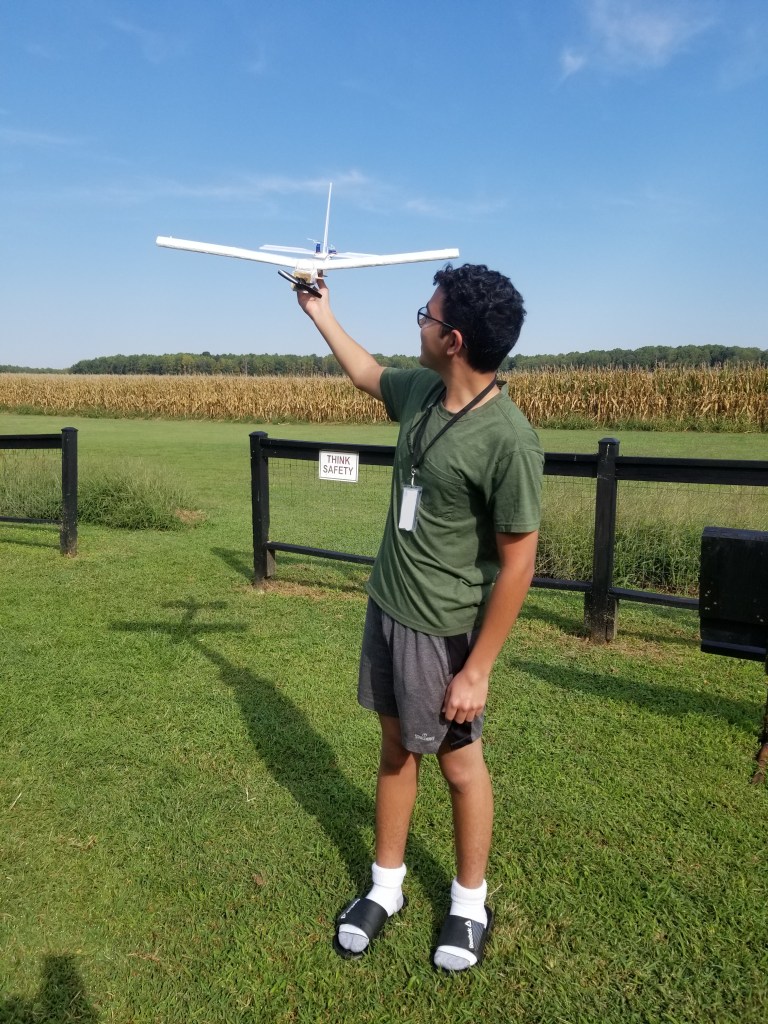
When we arrived at our local RC club’s runway, we were immediately greeted by the corn’s fall colors as well as by a couple of seasoned hobbyists who were eager to look over the newest plane iteration.
Examining each square inch of Caligula, they pointed out that the receiver (of which was sticking out of the plane because it couldn’t fit) would cause a lot of drag and worsen the plane’s performance. While I already knew this and originally thought little about it, they convinced me that a remedy was necessary. Thus, I cut two slits on the ends of the receiver hatch so that the servo wires could fit in and have more slack. Once this was done, the receiver was able to slide inside snugly. Duct tape was then put over the hatch to keep the airstream out.
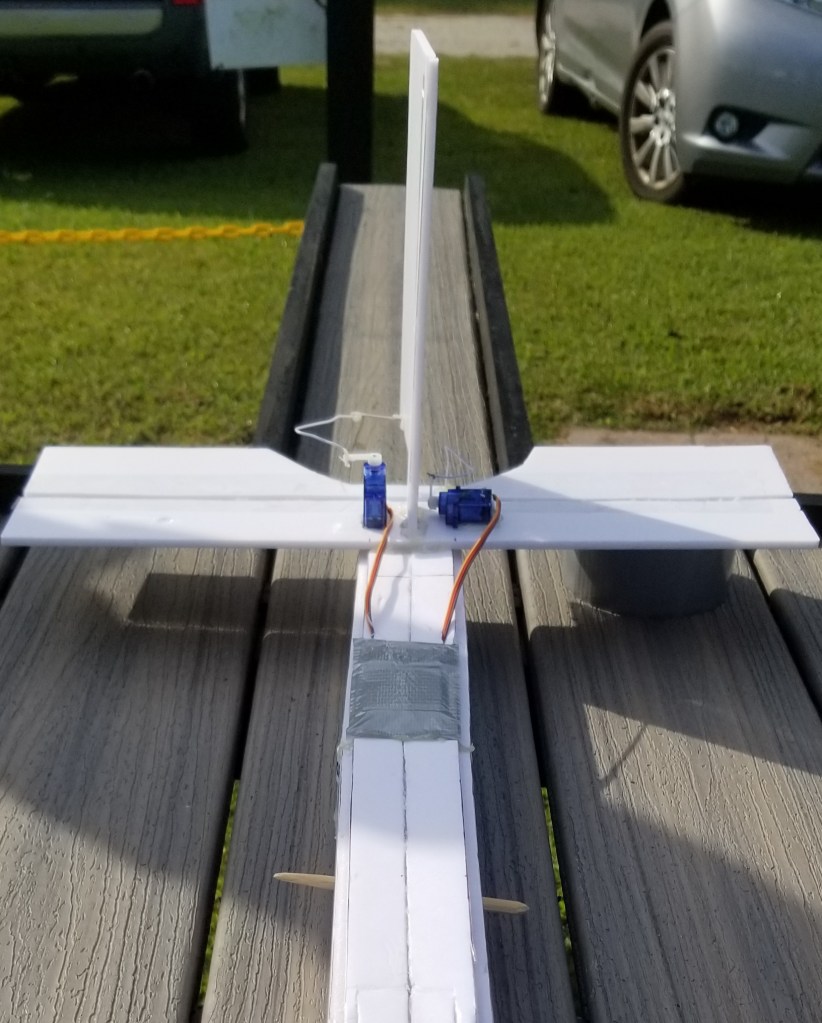
With the hobbyists satisfied, I started testing each component:
Rudder pivoted nominally.
Elevator pivoted nominally.
Motor spun nominally.
GPS tracker … whoops. Forgot to bring the tracker. It’s fine, though. Caligula probably won’t travel too far.
At any rate, every necessary component was present and working well.
We were go for launch.
My father walked out into the middle of the runway, holding Caligula high in the air. Turning on my transmitter, I checked the signal by swiveling both control surfaces and revving the motor for a second. Everything behaved.
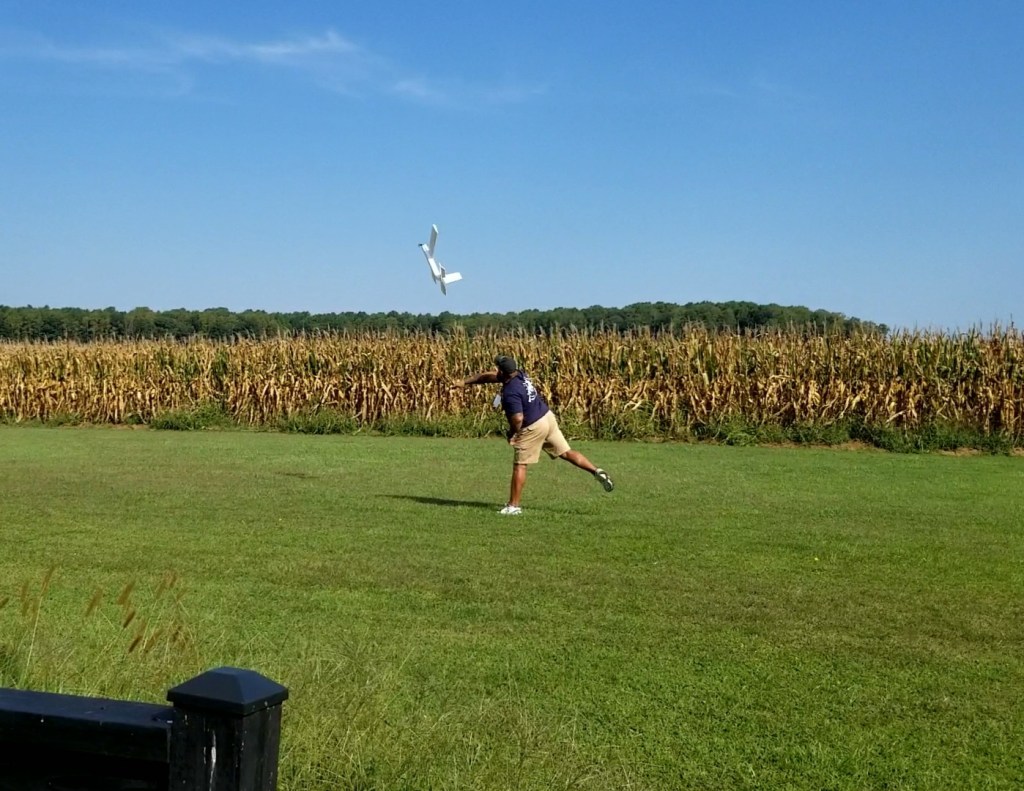
Pushing down on the elevator and throttling the motor to its highest setting, I motioned to my father: LAUNCH IT!
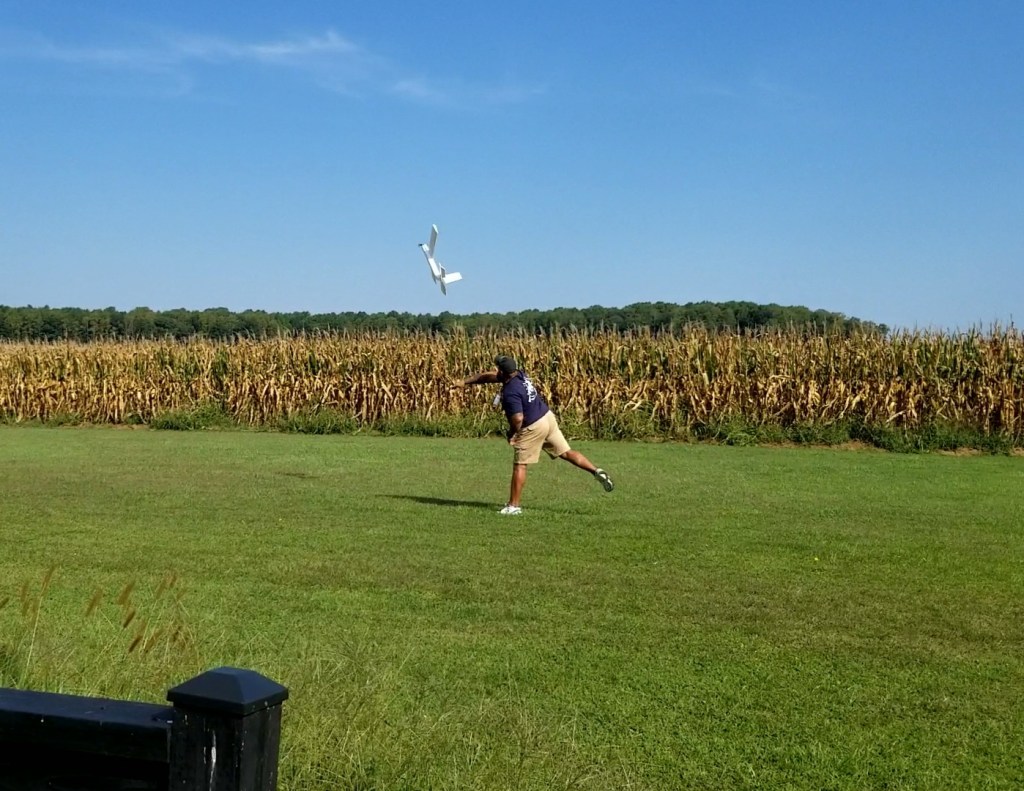
Gracefully, Caligula glided out of the hand of my father, propelled by its powerful Aeroscout motor.
Bernoulli’s principle was in full force, with the wings forcing the above air particles to accelerate toward the trailing edge and produce a region of low pressure.
And then…
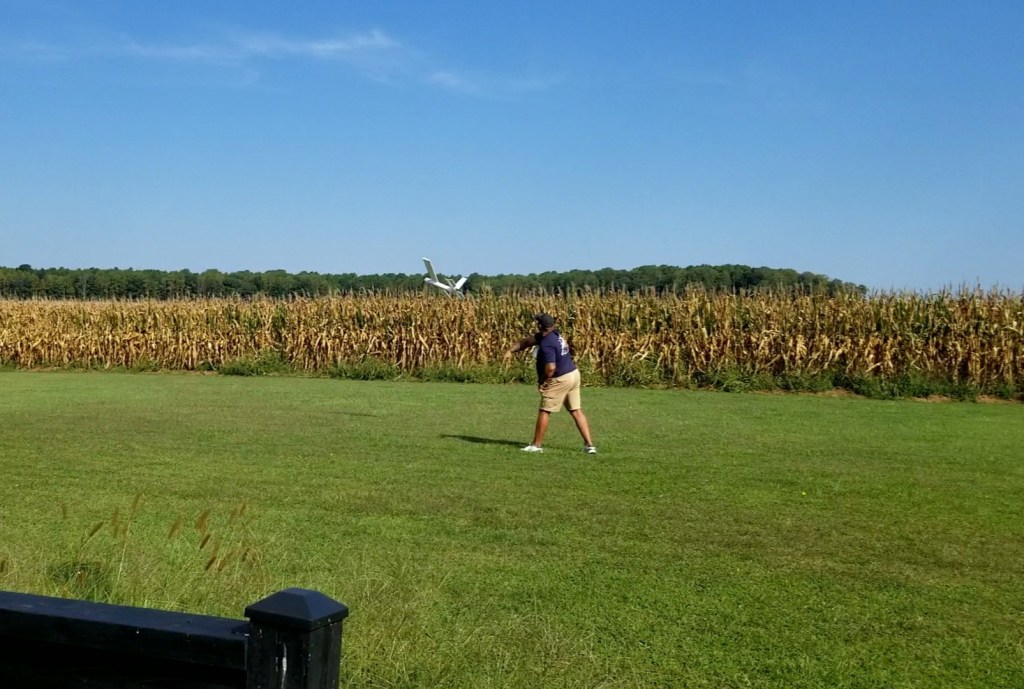
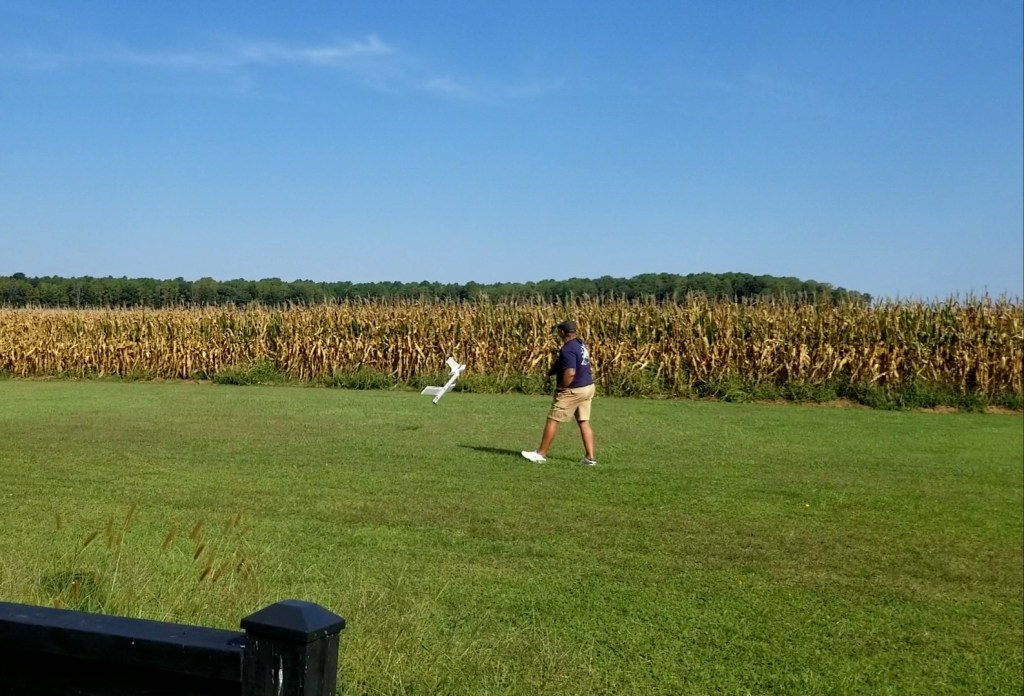
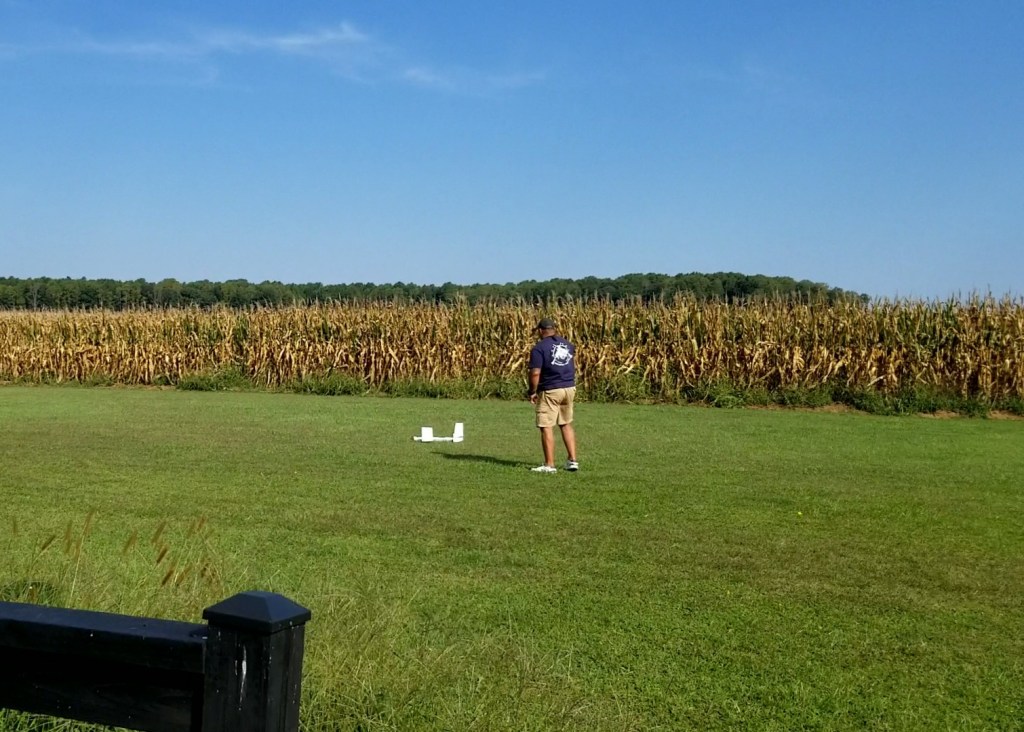
In technical terms, its thrust-to-weight ratio was less than 1. In layperson’s terms, it was too heavy.
I’m not sure if the design is nose-heavy or if it just weighs too much. I’ll have to figure that out.
Whatever the cause, Caligula sustained essentially zero structural damage. The propeller, however, did break and I didn’t have another on hand (whoops!). Thus ended that round of test flights.
Besides everything that went wrong, the plane performed incredibly well. It maintained a good orientation, flew for about a second, and looked great while doing it.
All of this demands that the flight of Caligula be considered a success — not a perfect flight, but still successful.
What lessons were learned?
- Make the plane lighter.
- Bring spare propellers.
Ad caelum!
 Santino's Engineering Blog